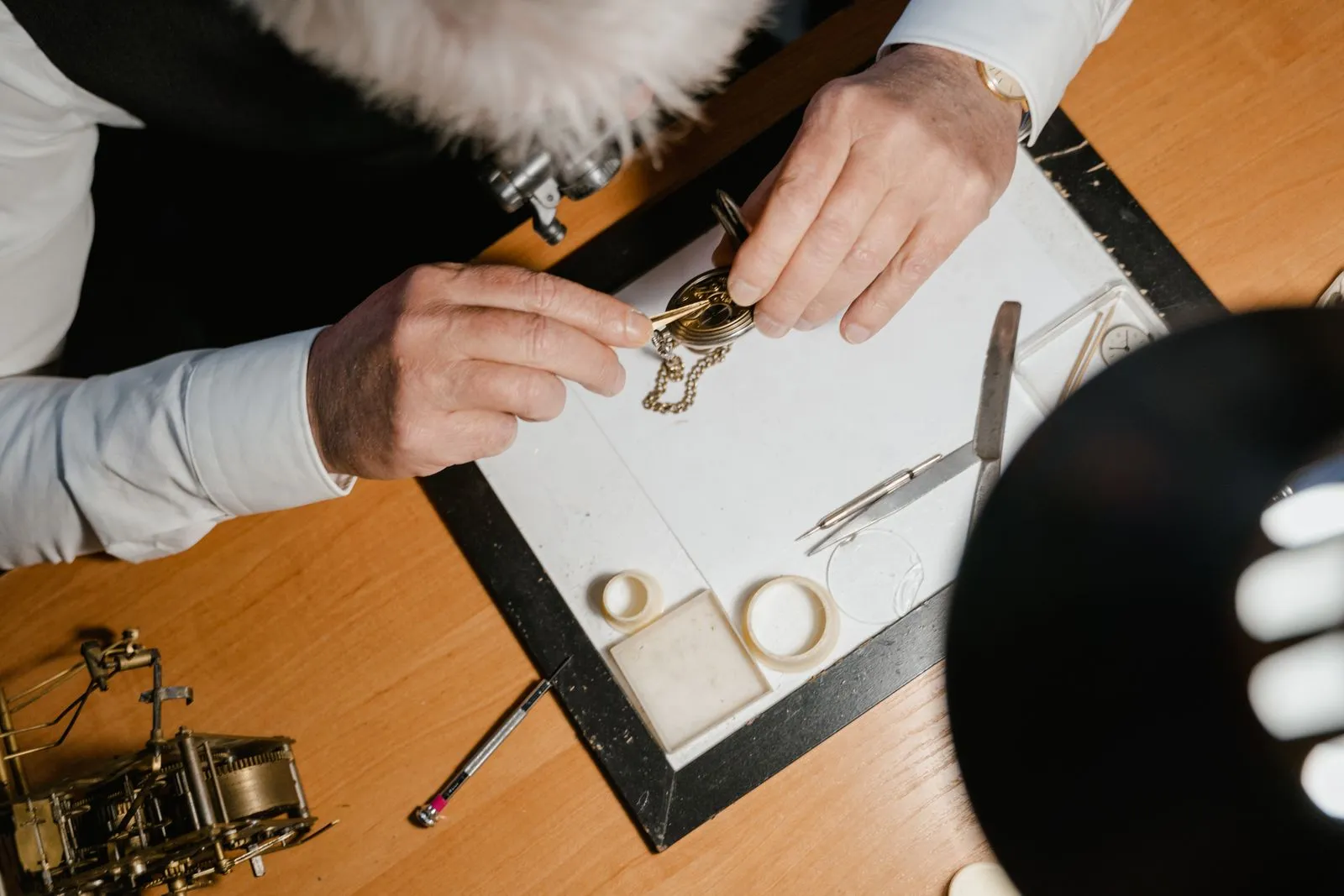
An antique watch repair usually begins with careful observation, not an immediate disassembly. The watchmaker needs to understand the watch’s condition, symptoms, and history before recommending work. That process helps identify what may be wrong and what should be preserved. Knowing what happens at each stage can help you share useful details, compare options, and make an informed decision before authorizing repairs to a watch with age, sentimental value, or both.
The Initial Assessment
Expect the watchmaker to ask what the watch is doing, when the problem began, and whether it has been serviced or repaired before. Describe symptoms as specifically as you can: for example, whether it stops after a few minutes, loses time, or has a crown that feels stiff. Mention any recent drops, moisture exposure, or unusual sounds. Even small details can help guide the inspection.
The watchmaker may examine the case, dial, hands, crystal, crown, and visible movement condition. Depending on the watch and the reported issue, they may also check whether it winds and runs. An initial inspection can reveal obvious concerns, but internal wear or damage may not become clear until the movement is opened. Ask what the assessment can confirm and what remains uncertain.
How Repair Planning Works
After the assessment, the watchmaker should explain the likely work in plain language. A plan may involve cleaning, lubrication, adjustment, replacing a worn part, or addressing damage. For an antique, suitable parts may be difficult to find, and a repair may require making or adapting a component. Ask which steps are essential to function and which are optional restoration choices.
Clarify how the shop will handle the watch’s original parts and finish. Replacing a component, polishing a case, or refinishing a dial can affect originality and appearance. If preservation matters to you, say so before work begins. Ask whether the watchmaker will contact you if opening the movement reveals additional problems, and request approval before the scope or cost changes.
Questions Before You Authorize
Before approving the work, ask for a written estimate or a clear explanation of how charges will be determined. Confirm what the estimate includes, whether inspection or disassembly fees apply, and what happens if you decline the repair after assessment. Ask for an expected completion window, while recognizing that antique parts and unexpected findings can affect timing.
Also ask what results the proposed work is intended to achieve. Will the watch be expected to run, keep time within a stated range, or simply receive a specific repair? Ask whether water resistance can be tested; do not assume an antique watch is safe around water after servicing. Confirm the shop’s warranty or service policy, how removed parts will be handled, and how you will be updated.
After You Approve the Work
Keep a record of the approved scope, estimate, and any preferences about original parts or cosmetic work. When the repair is complete, ask what was done, whether any parts were replaced, and whether the watchmaker noticed issues that may need attention later. Request practical guidance for winding and setting the watch, especially if its mechanism or operating routine differs from a modern timepiece.
A repaired antique watch may need careful handling and periodic service, but its needs depend on its age, construction, condition, and use. Follow the watchmaker’s specific recommendations rather than relying on a universal schedule. At Copper Crown Watch Repair in Phoenix, you can discuss the assessment and repair plan before deciding whether to proceed.
A clear assessment and written repair plan help protect both your watch and your expectations. Share the watch’s history, ask how proposed work affects originality, and get approval terms before authorizing repairs. If you have an antique watch to evaluate, contact a qualified watchmaker to discuss the next step.